

Kingpin Blog
Fingerboard gear, explained
Editorial guides for fingerboard buyers and sellers: how decks, trucks, wheels, and tuning work, how setups have evolved, and how to read listings — written cautiously, with no rarity, value, or authenticity guarantees.
Setup Guides
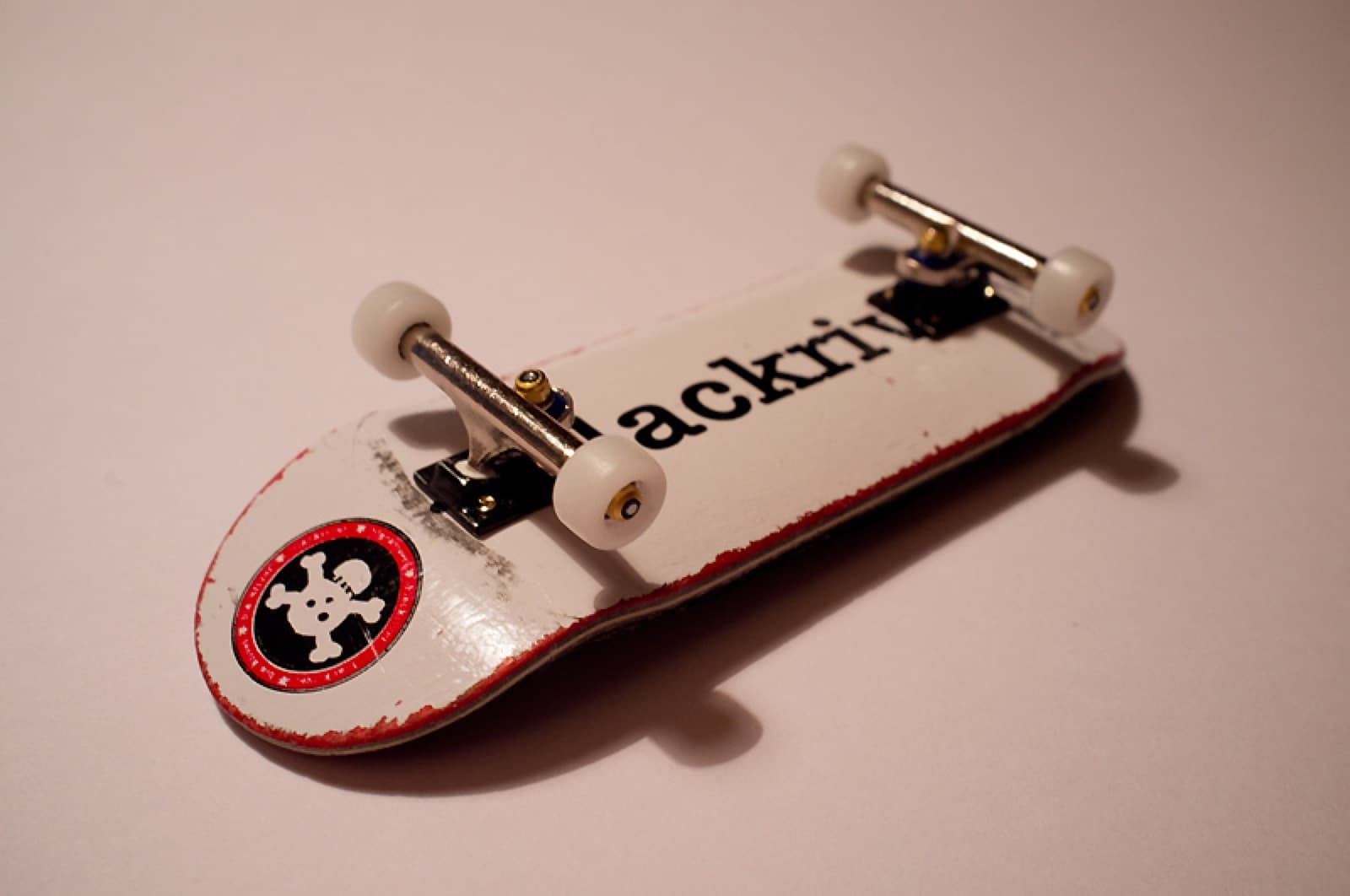
Setup basics
Beginner Completes: What Makes a Good First Fingerboard Setup
Help new buyers understand what parts are included and what specs and photos matter when evaluating a complete fingerboard listing.
9 min read
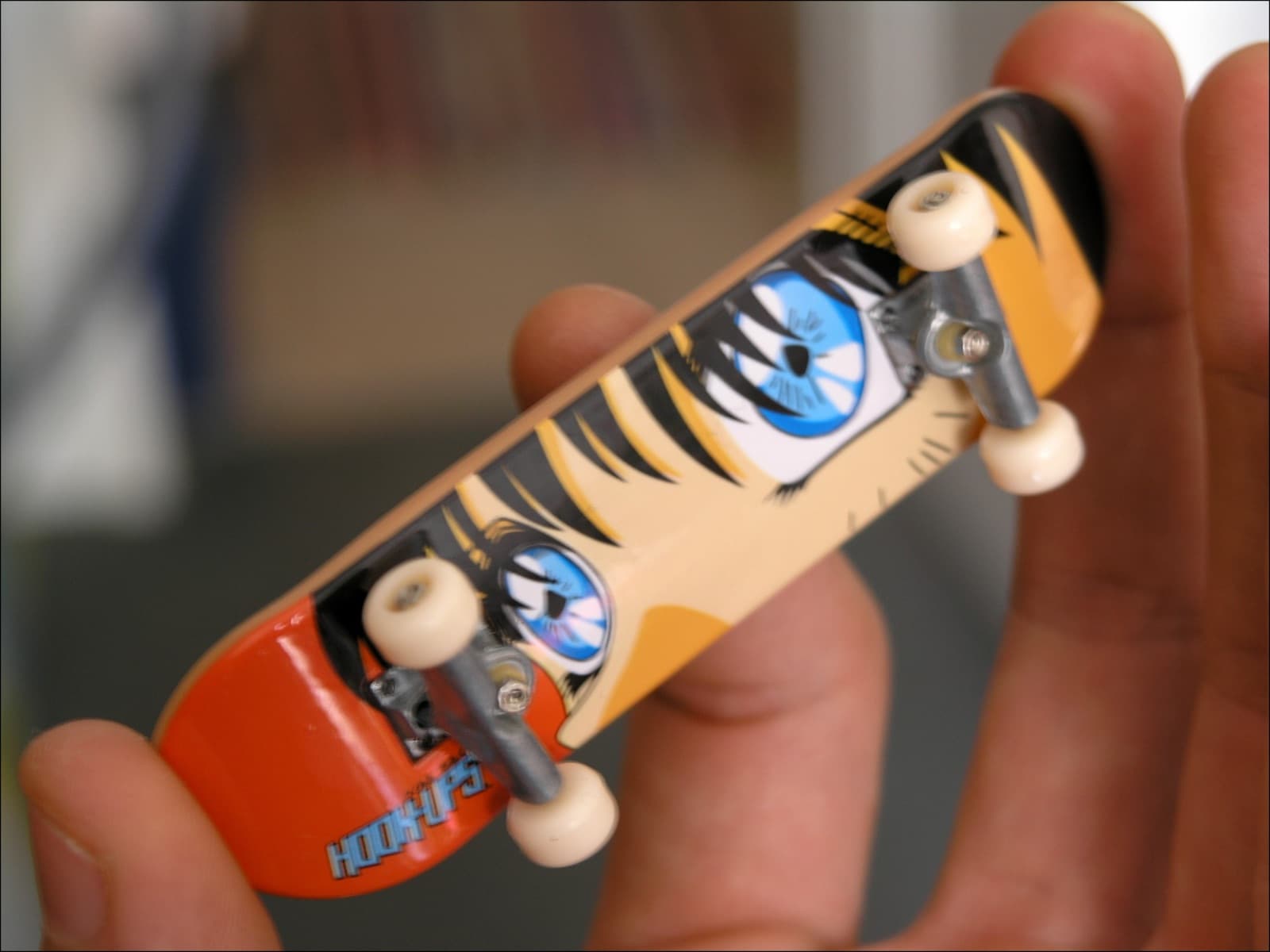
Decks
Deck Widths Explained: How to Choose and Compare Fingerboard Sizes
A reference for buyers comparing deck widths, upgraders, and deck hunters evaluating used listings where specs are often missing.
8 min read
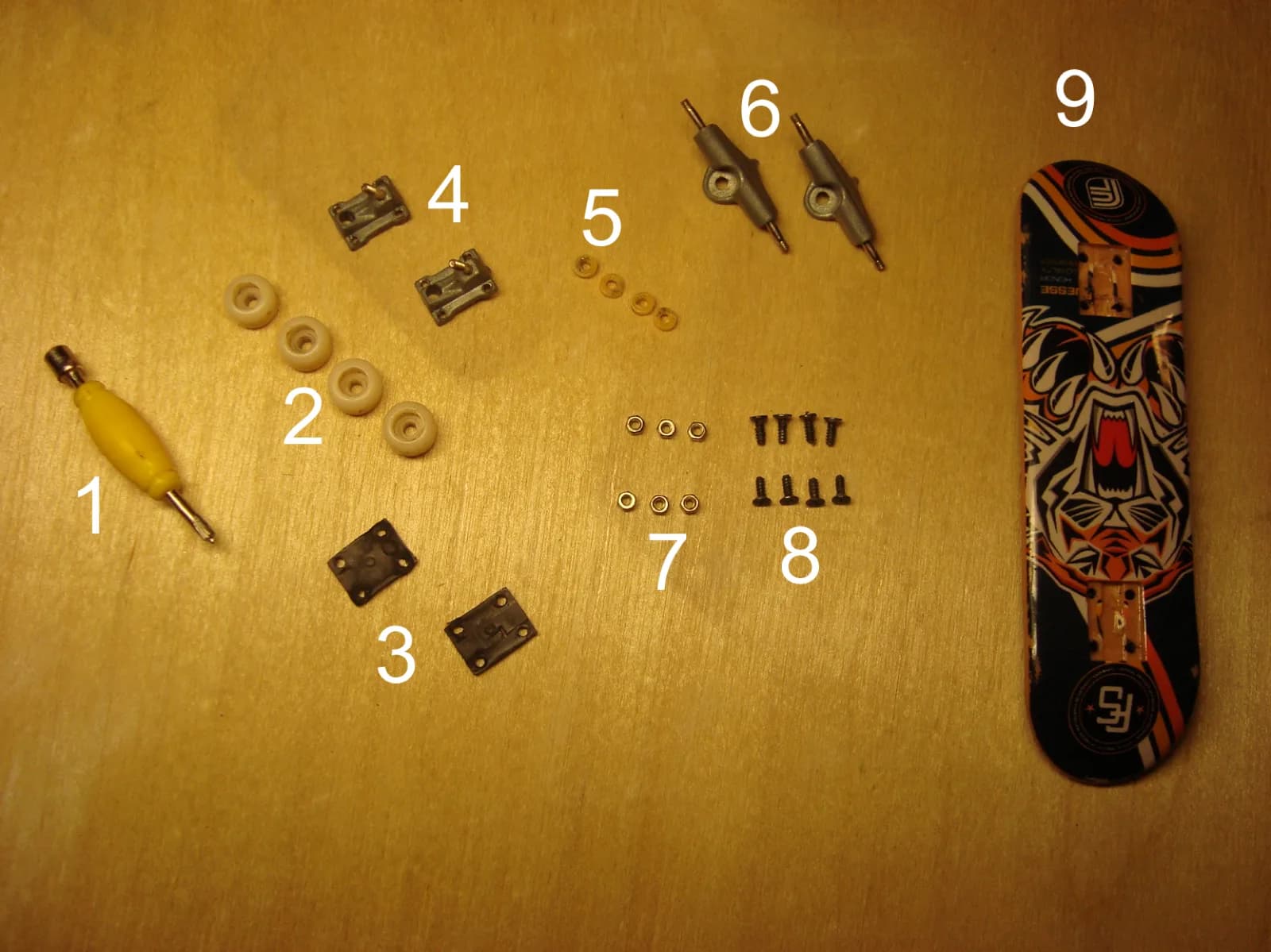
Trucks
Trucks and Deck Compatibility: A Buyer-Friendly Guide
Understand truck widths, axle fit, and how to match trucks to your deck.
8 min read
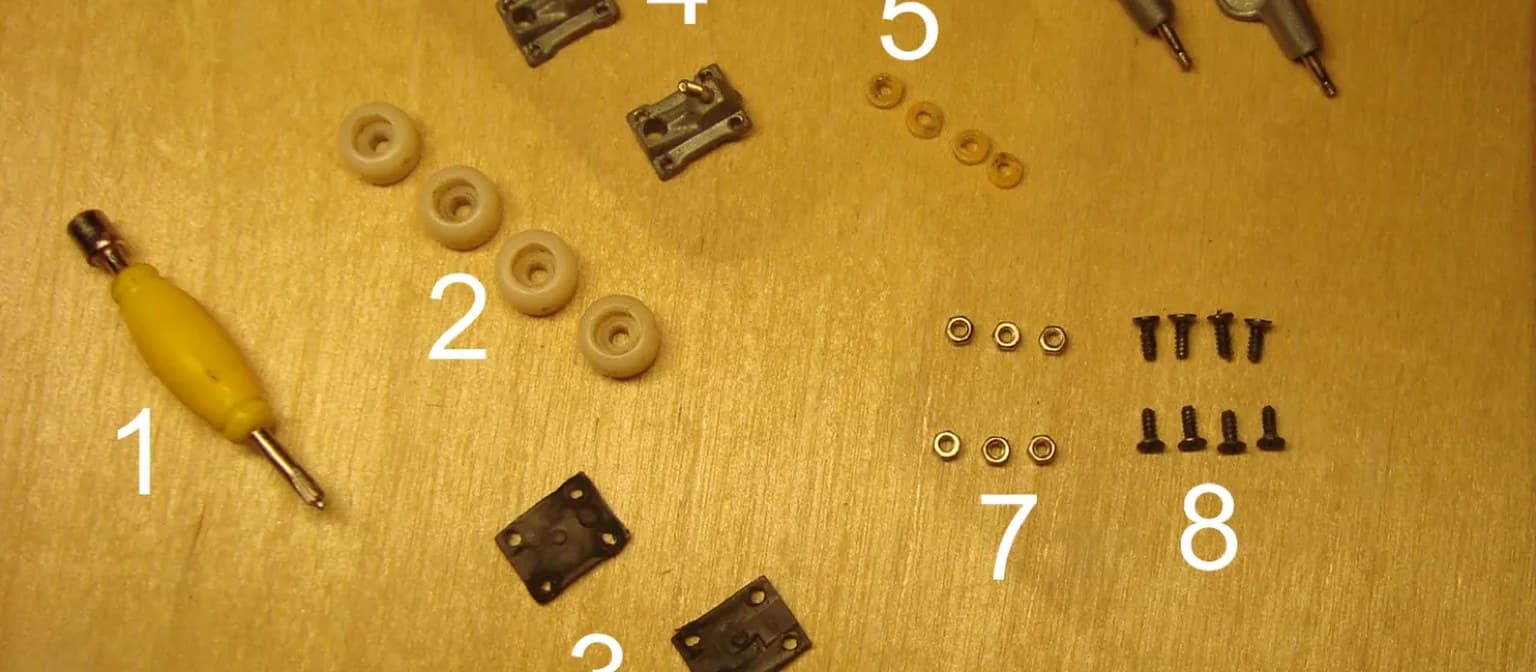
Wheels
Wheels Explained: Choosing Fingerboard Wheels
Materials, durometer, sizing, bearings, and shapes — what changes how a wheel feels.
8 min read
Tuning
Tuning Your Setup: Bushings, Pivot Cups, Grip, and Hardware
A practical guide to tuning fingerboard feel with bushings, pivot cups, grip, and small hardware.
9 min read
Buying smart
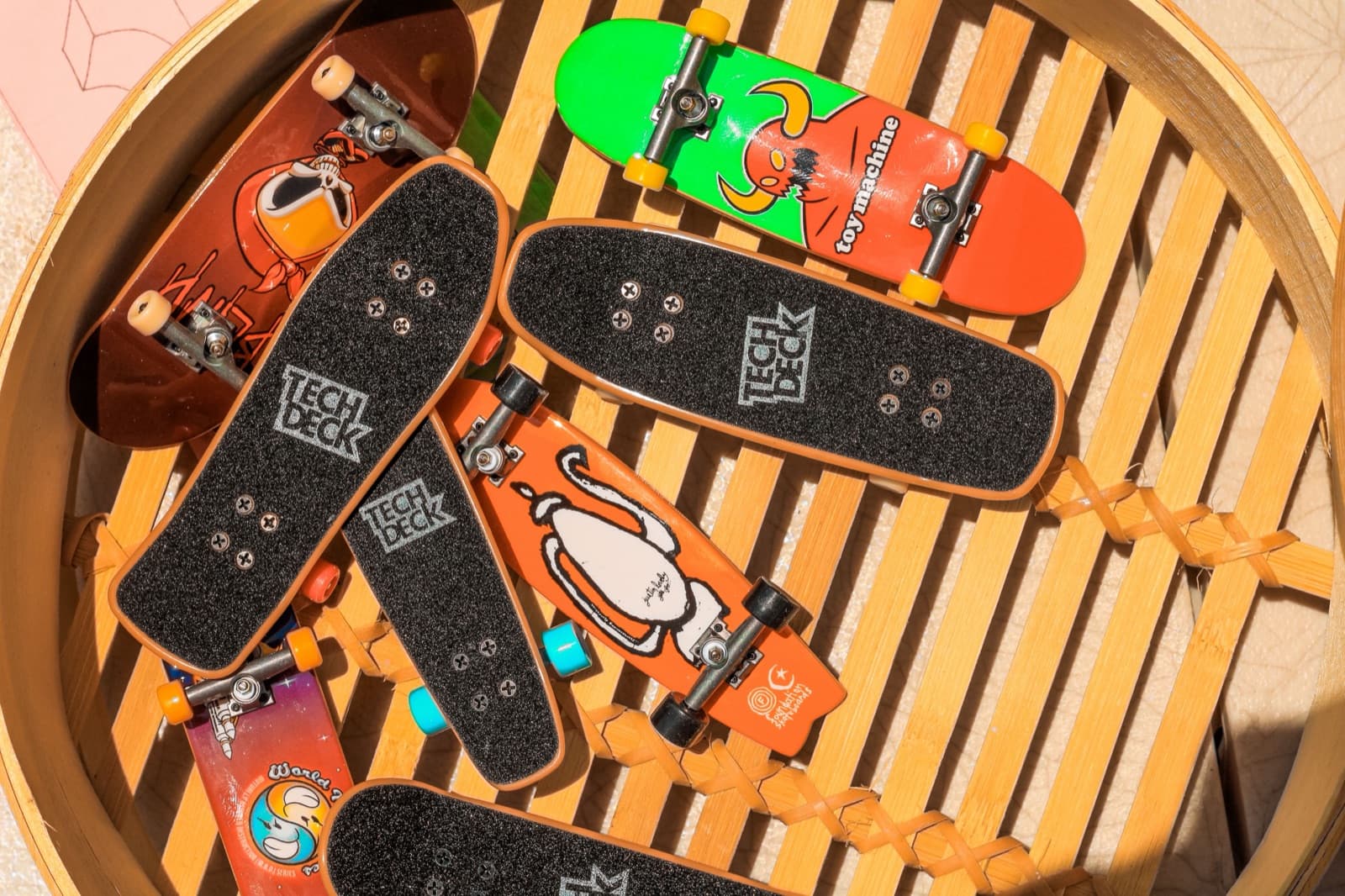
Rare Drops and Limited Graphics: How to Read Limited Releases
How drop culture works in fingerboarding, how to read limited-graphic claims, and how to verify a listing matches what it claims to be.
9 min read
Buying smart
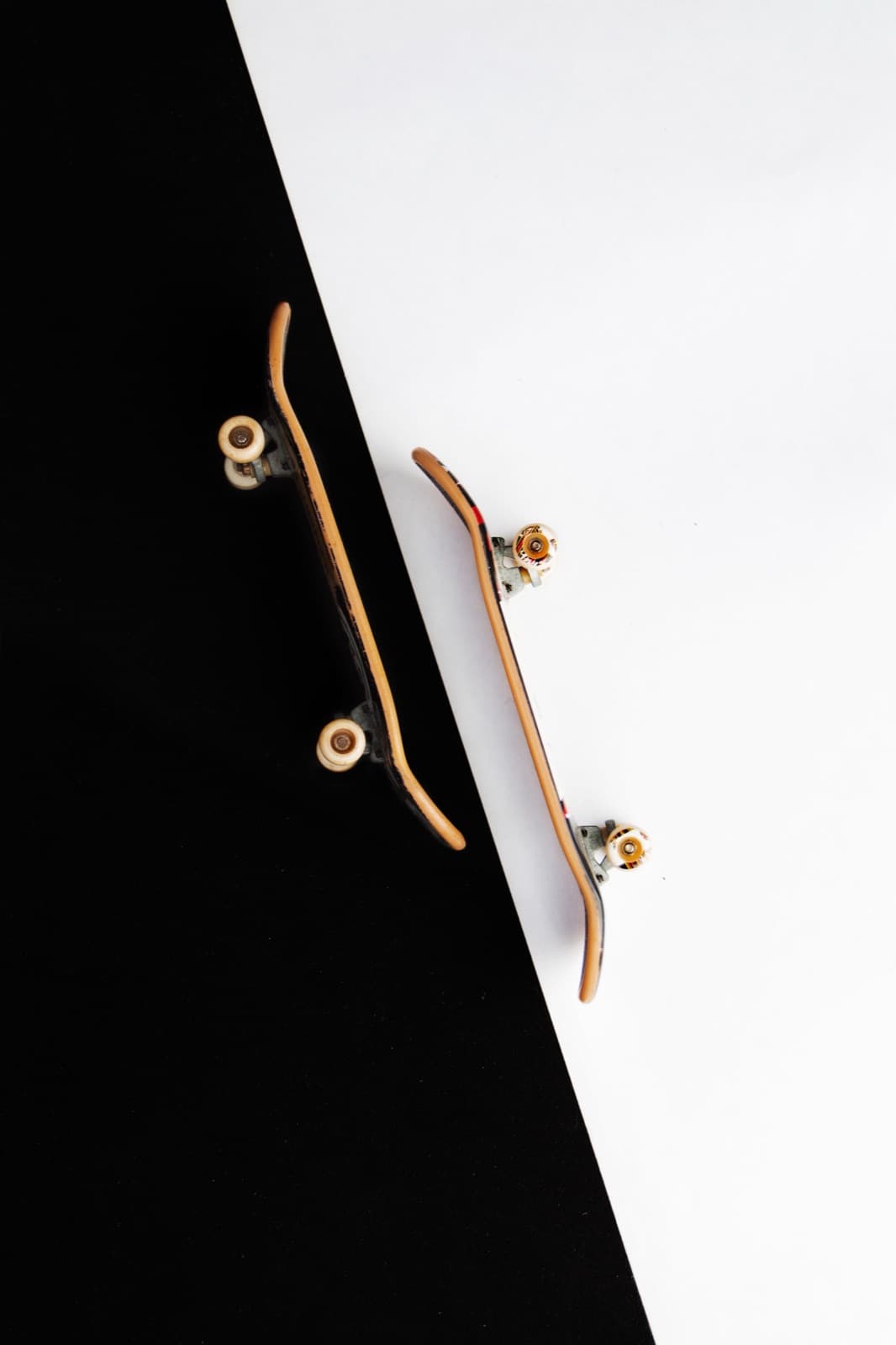
Used Fingerboard Listings: What Photos and Specs Should Show
What to look for in used listing photos and how sellers should document condition.
8 min read
Setup & space
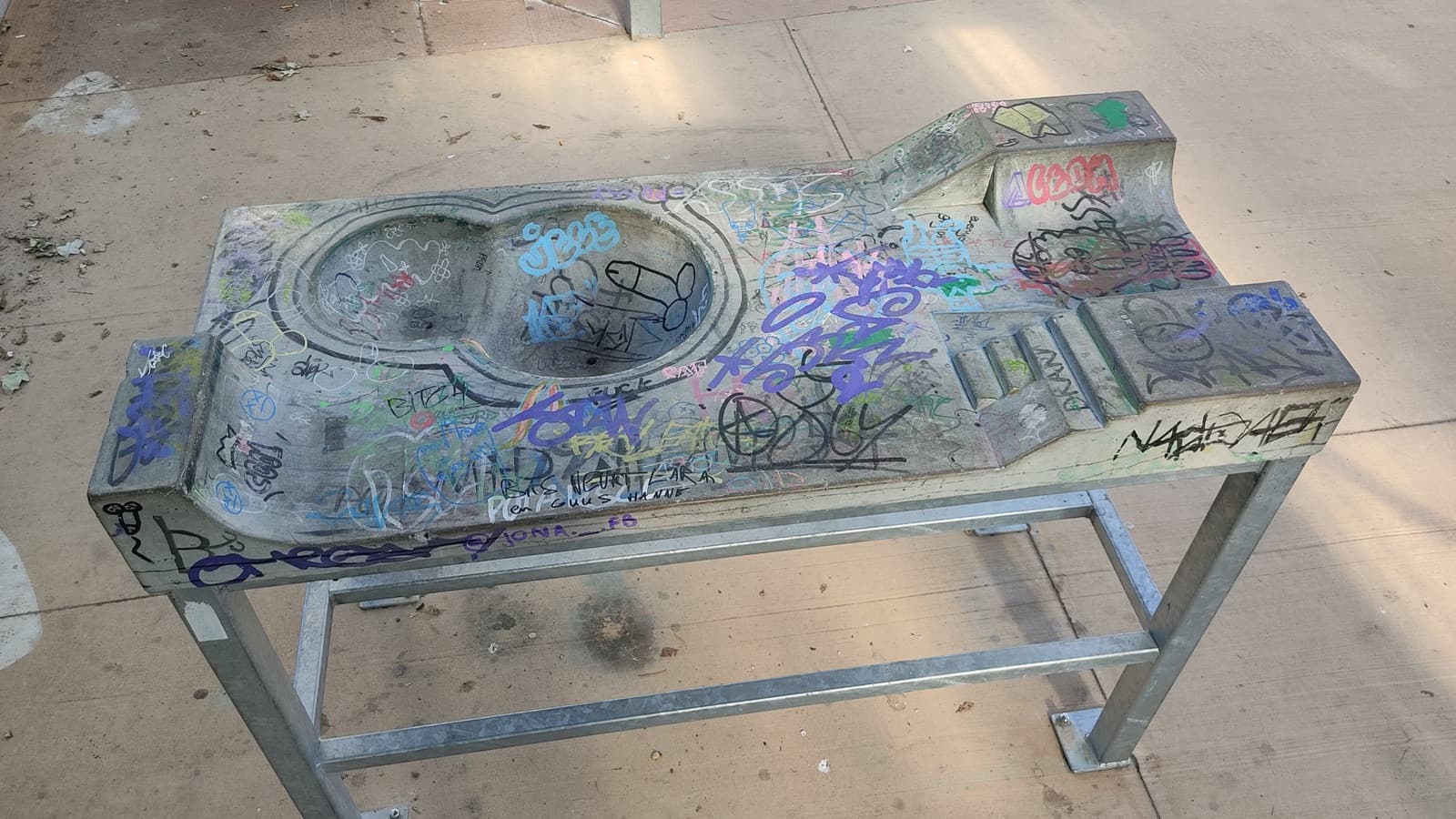
Fingerboard Obstacles: Types, Sizes, and What to Look For
A buyer and seller guide to rails, ledges, ramps, boxes, desk setups, and DIY obstacles.
8 min read
Makers & Movements
Fingerboard Pioneer Brands
Fingerboarding's pioneer brands, organized by era, country, and contribution — written cautiously, with sources and confidence flags, and no rarity, value, or authenticity claims.
Special series
Fingerboard Setup Trends Through the Years
A buyer- and seller-facing series on fingerboard gear: how decks, trucks, wheels, and tuning have evolved, and how to read setups and listings without rarity, value, or authenticity guarantees.
Origins
Pre-1985Miniature skateboard-like toys appeared as novelties and keychains long before fingerboarding had a name. Skateboarders improvised finger toys from found materials — bent popsicle sticks, cardboard, erasers, and tape — as informal tools for imagining tricks indoors. These early objects existed outside any commercial category and were traded among friends rather than bought in stores.
Somerville International- Decks
- No commercial wooden fingerboard decks existed in this era. DIY boards were improvised from cardboard, popsicle sticks, clay, and similar household materials. Plastic keychain 'mini skateboards' were available as novelties but were not designed for trick use.
- Trucks & wheels
- Wheels were improvised (erasers, clay) or fixed non-functional plastic. No precision truck hardware existed.
- Community & market
- No organised marketplace. Boards were hand-made and shared within skate friend groups. No retail channel or collector culture existed for these objects.
References: Archival image of novelty plastic keychain skateboards from the 1970s–1980s toy market
Skate Video & DIY Era
1985–1994Lance Mountain's appearance with a homemade fingerboard in the 1985 Powell-Peralta film Future Primitive is widely cited as an early large-scale public showcase of fingerboarding. Kids who saw the video started making their own boards from popsicle sticks and cardboard. Through the late 1980s and early 1990s, fingerboarding remained a grassroots activity — no organised industry, no dedicated retail, and no standardised hardware.
Powell-Peralta- Decks
- Fully DIY era. Accounts of Lance Mountain's homemade board differ — Wikipedia describes wood, tubes, and toy-train axles for the Future Primitive board, and cardboard with pencil erasers for his earlier prototype. Home workshops used whatever was available: popsicle sticks, balsa wood, tape, clay. No commercial wooden fingerboard deck existed yet.
- Trucks & wheels
- No commercial fingerboard trucks or wheels. DIY objects used improvised or fixed plastic components. Martin Winkler is documented (per Winkler Wheels) as making his own fingerboards and wheels by the mid-1980s, though the specific 1987 three-ply detail is community-sourced.
- Community & market
- No marketplace. Boards were swapped informally among skate friends. The activity had no dedicated retail presence and no collector economy.
Tech Deck Era
1994–2002X Concepts launched the Tech Deck brand in 1998, bringing fingerboarding into mass-market toy retail with officially licensed miniature decks replicating real skateboard graphics from brands such as World Industries and Powell Peralta. Tech Deck became a widespread collector fad by 1999. The brand was later acquired by Spin Master in January 2007. This era made fingerboarding visible to a generation of kids but also linked it in the public mind with cheap plastic construction.
Tech Deck / X ConceptsSpin Master- Deck sizes
- Tech Deck plastic decks approximately 26mm wide (community-documented; modern pro sizing is covered in the references).
- Decks
- Tech Deck decks were injection-moulded plastic, approximately 26mm wide, replicating the shape of full-size popsicle decks and featuring licensed graphics from real skateboard companies. The plastic construction was not suited to the technical trick standards that emerged in later wooden deck eras.
- Trucks & wheels
- Plastic trucks with non-functional wheels (no bearings, no urethane). The setup was designed as a toy rather than a performance product.
- Community & market
- Sold through major toy retailers (Target, Walmart, Kmart). Collector fad culture in 1999 — children traded licensed deck graphics similarly to trading cards. No dedicated fingerboard marketplace; transactions happened in playgrounds and via early internet classifieds.
Early Boutique & Wood Deck Era
1999–2006While Tech Deck dominated toy-store shelves, a parallel scene emerged in Europe centred on hand-pressed wooden decks, purpose-built ramps, and the first organised fingerboard competitions. Blackriver was founded in Germany in 1999 to make professional-quality ramps. Berlinwood followed in 2002, offering the first widely available wooden fingerboard decks for the serious riding community. FlatFace Fingerboards launched in the US in 2003, initially selling grip tape before expanding to decks and wheels. These brands established the template for boutique fingerboarding.
BlackriverBerlinwoodFlatFace Fingerboards- Deck sizes
- Berlinwood decks available in 29mm and 32mm (and later 33.3mm and 36mm), per the Blackriver shop's Berlinwood listings. Wider sizes evolved over subsequent eras.
- Decks
- Berlinwood introduced hand-pressed 5-ply maple veneer decks as an alternative to plastic. Early wooden decks were narrower than today's standards — Berlinwood widths of 29mm and 32mm are documented from this period. Deck construction was manual and small-batch. Graphics were screen-printed or applied as stickers.
- Trucks & wheels
- Early boutique setups used plastic trucks adapted from Tech Deck or early homemade designs. Blackriver Trucks were not launched until 2010. This era's truck and wheel hardware was a significant limitation compared to ramp and deck quality.
- Community & market
- Fast Fingers 1 competition launched in 2000 (Blackriver). The first fingerboard park opened in 2000. Online forums such as Fingerboarders.net and Fingerboard.de allowed European and US communities to share footage and sell small-batch products directly. No dedicated fingerboard marketplace platform existed; transactions were forum-based.
Community Growth Era
2006–2012YouTube and expanding online forums brought fingerboard footage to a global audience. FlatFace Fingerboards released its bearing-wheel line — the G4, G5, and G6 — making performance wheels more accessible. Oak Wheels launched in Portugal in 2009 as one of the earliest dedicated urethane wheel brands. The Fast Fingers world championship grew in prominence. This era saw wooden decks become the community standard for serious riders, with boutique brands gaining ground over plastic toy setups.
BlackriverBerlinwoodFlatFace FingerboardsOak WheelsYellowood- Deck sizes
- 29mm was popular for much of this era; 32mm began gaining ground as a wider option. Community sources note 32mm 'seemed too wide' to early riders, indicating 29mm as the prevailing standard in this window.
- Decks
- Wooden decks became the standard for serious riding. 5-ply maple construction was typical. Berlinwood's popsicle shapes were a common reference. FlatFace released multiple deck generations before pausing production in 2006 and refocusing on wheels.
- Trucks & wheels
- Blackriver Trucks (BRTs) launched in 2010 — a major hardware milestone. FlatFace G4 bearing wheels (originally designed 2007, updated 2009) gave riders performance urethane. Oak Wheels V1 urethane launched 2009 from Portugal. FlatFace began distributing Oak in 2010.
- Community & market
- YouTube enabled video sharing of lines and trick tutorials, accelerating skill spread and brand visibility. Fingerboard Weekly launched in 2008 as a community hub. Online forum trading was the primary secondary market. No dedicated fingerboard marketplace platform existed; PayPal + forum threads were the norm.
Pro Setup Era
2012–2018Precision hardware became the defining characteristic of serious setups. Urethane wheels from brands including Oak, FlatFace, and Winkler replaced earlier plastic options. CNC machining enabled more consistent trucks and wheels. Deck widths trended upward as riders sought proportions closer to modern full-size skateboard shapes. Teak Tuning launched in 2014 as a broad mid-range brand serving the growing beginner and intermediate market. Dynamic Fingerboards launched in 2016 in Southern California.
BlackriverBerlinwoodFlatFace FingerboardsOak WheelsTeak TuningDynamic Fingerboards- Deck sizes
- 29mm and 32mm were both popular; 34mm and 36mm began appearing as boutique options. Community sources note that 32mm 'had been popular for many years' and 34mm was beginning to attract interest by the end of this era.
- Decks
- 5-ply maple decks with defined concave options (low, medium) and multiple widths became the norm. CNC machining and improved mold-pressing raised deck consistency. Popsicle shapes were dominant but old-school and specialty shapes were available. Graphics shifted toward split-ply (real-wood veneers) as a premium finish.
- Trucks & wheels
- BRT trucks (Blackriver), Winkler Wheels, FlatFace G-series bearing wheels, and Oak Wheels were popular in pro setups. CNC lathing improved wheel roundness and bearing consistency. Urethane replaced plastic as the expected material for serious riders.
- Community & market
- Instagram became a key channel for brand drops and rider clips. Forum-based secondary trading continued. No dedicated fingerboard marketplace platform was widely established; buyers and sellers used Instagram DMs, Facebook groups, and forum threads.
Modern Boutique Era
2018–presentThe fingerboard market matured into a premium, drop-driven boutique culture with some characteristics similar to streetwear and sneaker collecting. Wooden fingerboards saw significant demand growth. Deck widths trended toward 34mm as the new popular standard, with 36mm and wider options emerging from boutique brands. Limited-batch releases on Instagram, brand web drops, and resale via secondary marketplaces became the dominant trading pattern. Brands such as Maple Wheels (Canada, 2018), Blistered (US, 2022), and Caramel Fingerboards broadened the hardware landscape.
BlackriverBerlinwoodFlatFace FingerboardsOak WheelsMaple WheelsBlisteredCaramel FingerboardsPiro WheelsDude Guy FBUAG F.B- Deck sizes
- 34mm has become the most popular width for pro setups per multiple retailer sizing guides. 32mm remains widely ridden. 36mm and wider options are available from boutique brands including Berlinwood.
- Decks
- 5-ply Canadian maple with CNC precision is the entry-level pro standard. Split-ply and real-wear-graphic decks are popular in the boutique segment. Wider shapes (34mm, 36mm) reflect a preference for proportions closer to modern full-size skateboard geometry.
- Trucks & wheels
- Precision urethane wheels (dual-durometer, collaboration shapes) and CNC truck hardware from Blackriver, Dynamic, and others define the high end. CNC lathed 100D polyurethane wheels at the accessible end (Teak Tuning) versus hand-poured boutique urethane (Oak, Blistered, Maple, Piro, and Dude Guy FB) at the collector end.
- Community & market
- Instagram drops, dedicated fingerboard marketplaces, and brand web shops are the primary buying channels. Secondary resale — including platforms like Kingpin — has grown as brands limit batch sizes. Limited colorways, collaboration shapes, and packaged sets carry collector premiums. Buyer behaviour increasingly mirrors streetwear drop culture: quick sell-outs, resale at premiums, and packaging-as-signal.
References: FlatFace x Oak Dual Durometer bearing wheels product listing image (reference; rights held by FlatFace / Oak Wheels); Blackriver shop current truck and wheel catalog page (reference; rights held by Blackriver)